
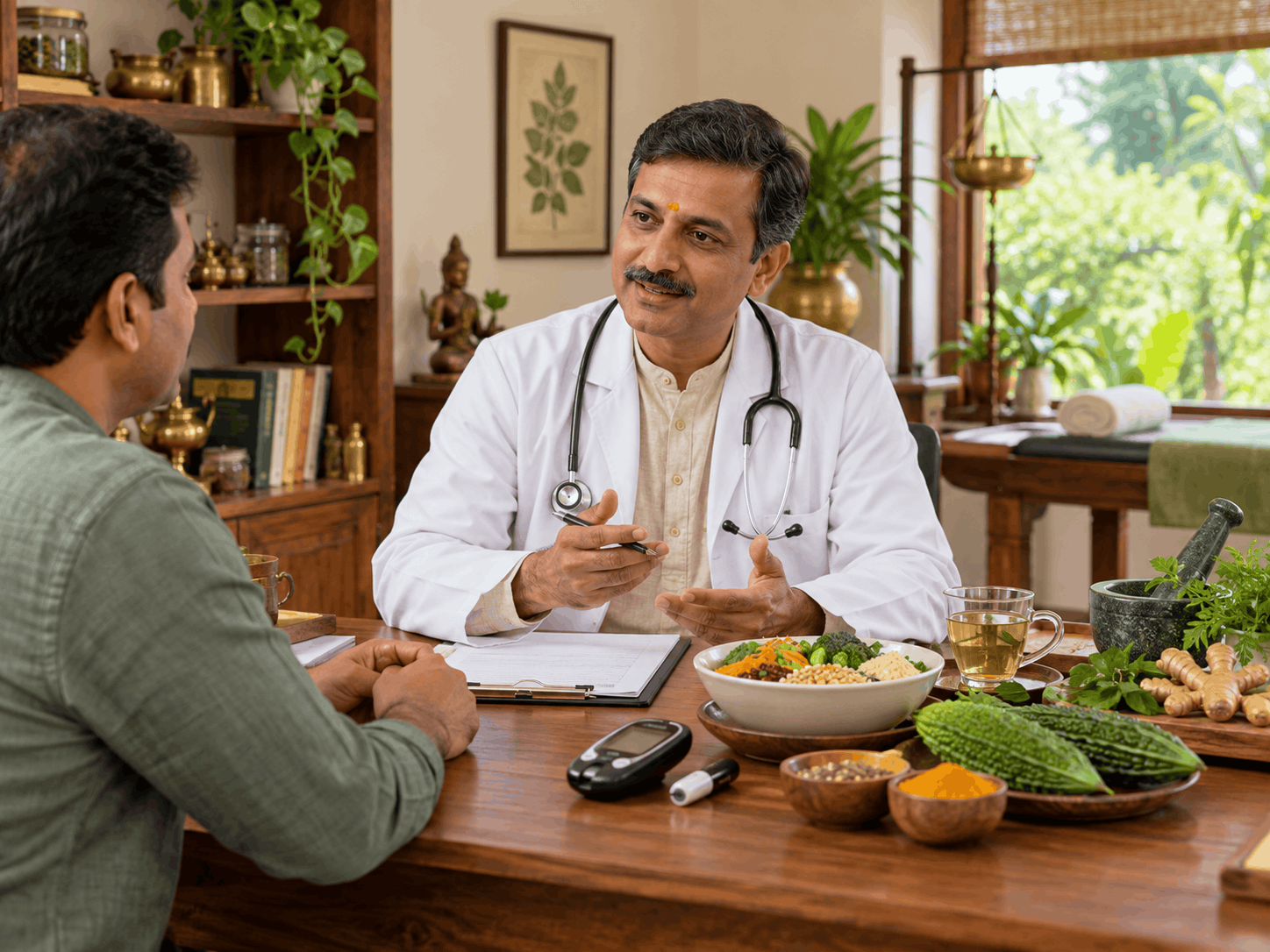
Diabetes is a common chronic health condition that affects how the body regulates blood sugar levels. Managing diabetes requires more than simply avoiding sweets. Healthy eating, regular physical activity, proper sleep, stress management, blood glucose monitoring, and prescribed medical treatment all play important roles in maintaining long-term health.
Ayurvedic Diabetes Management focuses on a holistic understanding of health, emphasizing balanced nutrition, daily routines, mindful living, and individualized wellness practices.
At Centre for Holistic Medicine, Faridabad, patients interested in integrating Ayurvedic wellness principles into their daily lives can explore a holistic approach alongside their regular diabetes treatment under appropriate medical supervision.
What Is Diabetes?
Diabetes mellitus is a metabolic condition characterized by consistently elevated blood glucose levels. It develops when the body does not produce enough insulin or cannot use insulin effectively.
The two main types include:
Type 1 Diabetes: An autoimmune condition in which the pancreas produces little or no insulin. People with type 1 diabetes require insulin treatment.
Type 2 Diabetes: A condition in which the body becomes resistant to insulin or cannot produce enough insulin to maintain healthy blood glucose levels.
Type 2 diabetes is commonly associated with factors such as family history, physical inactivity, excess body weight, and certain metabolic conditions. However, it can affect people of different ages and body types.
Without proper management, diabetes may increase the risk of cardiovascular disease, kidney problems, nerve damage, and vision complications.
Understanding Diabetes in Ayurveda
In traditional Ayurveda, diabetes-related symptoms are often discussed under the broader concept of Madhumeha, which is associated with descriptions of excessive urination and metabolic imbalance.
Ayurvedic philosophy examines factors such as dietary habits, digestion, physical activity, daily routines, and overall well-being.
Diabetes Management in Ayurveda traditionally emphasizes a balanced lifestyle and personalized recommendations based on an individual’s health condition.
However, traditional Ayurvedic concepts should not be considered equivalent to modern diabetes diagnosis. Blood glucose tests and medical evaluation remain essential for identifying and monitoring diabetes.
Ayurvedic wellness practices may complement conventional diabetes care, but they should never replace prescribed insulin or other diabetes medications.
Common Symptoms of Diabetes
Recognizing possible warning signs can encourage timely medical evaluation.
Common symptoms include:
- Frequent urination, particularly at night
- Increased thirst and dry mouth
- Unexplained fatigue or weakness
- Blurred vision
- Slow-healing wounds
- Increased hunger
- Unexplained weight loss
- Tingling or numbness in the hands and feet
Some people with type 2 diabetes experience very few symptoms during the early stages.
If these symptoms occur, consult a qualified healthcare professional for appropriate testing.
The Role of Ayurvedic Diabetes Management
Ayurvedic Diabetes Management generally emphasizes lifestyle awareness, balanced eating habits, stress reduction, and individualized wellness support.
1. Balanced Diet and Nutrition
Nutrition is essential for managing blood glucose levels.
A balanced diabetes-friendly diet may include whole grains, non-starchy vegetables, lentils, suitable fruits, nuts, and appropriate protein sources.
Traditional Indian foods such as dal, vegetables, whole-grain rotis, and high-fibre meals can be incorporated into a personalized eating plan.
Individuals should limit sugary drinks, excessive refined carbohydrates, and highly processed foods while maintaining appropriate portion sizes.
Rather than completely avoiding carbohydrates, the focus should be on their quantity, quality, and distribution throughout the day.
2. Regular Physical Activity
Physical activity supports insulin sensitivity and helps the body use glucose more effectively.
Walking, cycling, swimming, and other moderate exercises can contribute to better metabolic health.
Many adults can aim for approximately 150 minutes of moderate physical activity per week, depending on their medical condition and doctor’s advice.
People taking insulin or medications that may cause low blood sugar should discuss exercise precautions with their healthcare provider.
3. Yoga and Stress Management
Stress can make diabetes management more challenging.
Yoga, gentle breathing exercises, meditation, and relaxation techniques may support emotional well-being, sleep quality, and stress management.
These practices can form part of a holistic wellness routine.
However, yoga should be regarded as a complementary activity rather than a substitute for blood glucose monitoring or medical treatment.
4. Healthy Sleep and Daily Routine
Poor sleep and irregular daily habits may negatively affect metabolic health.
Maintaining consistent sleep and waking times, eating regular meals, and staying physically active can support healthier routines.
Adults generally benefit from approximately seven to nine hours of sleep per night, although individual requirements vary.
5. Individualized Ayurvedic Consultation
Traditional Ayurvedic care may involve personalized dietary and lifestyle recommendations.
Some Ayurvedic herbs and formulations have been studied for their potential effects on blood glucose. However, current scientific evidence remains insufficient to establish most herbal preparations as effective diabetes treatments.
Certain herbal products may interact with diabetes medications or cause adverse effects.
Therefore, individuals should consult their treating physician before using Ayurvedic medicines or supplements, especially if they have kidney or liver conditions.
Healthy Foods That Support Diabetes Management
A practical eating routine can include a variety of nutritious foods.
Green Vegetables: Spinach, bottle gourd, bitter gourd, broccoli, and other vegetables provide fibre and essential nutrients.
Whole Grains: Oats, whole wheat, and millets can be included in controlled portions based on individual carbohydrate requirements.
Protein-Rich Foods: Lentils, beans, paneer, eggs, and other appropriate protein sources help create balanced meals.
Nuts and Seeds: Almonds, walnuts, and seeds may contribute healthy fats and nutrients when consumed in suitable portions.
Whole Fruits: Guava, apples, oranges, and other whole fruits can be included according to individual blood glucose responses and dietary recommendations.
No single food can cure diabetes. Long-term improvement depends on overall dietary patterns, medical care, and sustainable lifestyle habits.
Why Regular Blood Sugar Monitoring Matters
Blood glucose monitoring is an important part of diabetes management.
Healthcare professionals may recommend tests such as fasting blood glucose, post-meal blood glucose, and HbA1c.
HbA1c provides information about average blood glucose levels over approximately two to three months.
Monitoring helps patients and healthcare professionals understand how medication, meals, activity, and other factors influence glucose levels.
Individual blood sugar targets should be established with a qualified medical professional.
Holistic Wellness Support at Centre for Holistic Medicine, Faridabad
At Centre for Holistic Medicine, the emphasis on Ayurvedic and holistic wellness provides an opportunity to explore healthier lifestyle practices.
People interested in Ayurvedic Diabetes Management can discuss nutrition, physical activity, daily routines, stress reduction, and complementary wellness approaches with qualified practitioners.
The objective of complementary care should be to support overall well-being while maintaining necessary conventional diabetes treatment and regular medical follow-up.
Treatment recommendations should always be personalized according to the patient’s medical history, medications, and health needs.
Conclusion
Diabetes management is a long-term commitment involving balanced nutrition, regular exercise, blood glucose monitoring, appropriate medical treatment, and healthy daily habits.
Ayurvedic Diabetes Management offers a traditional wellness perspective that emphasizes lifestyle balance and individualized routines. When used responsibly alongside evidence-based medical care, selected wellness practices may help individuals develop healthier habits.
For those exploring holistic lifestyle support in Faridabad, Centre for Holistic Medicine provides a relevant setting to discuss Ayurvedic wellness practices with qualified professionals.
Frequently Asked Questions (FAQs)
1. Can Ayurveda permanently cure diabetes?
There is no reliable scientific evidence that Ayurveda can permanently cure diabetes. Appropriate medical treatment, lifestyle changes, and regular monitoring remain important.
2. Is Ayurvedic treatment safe for people with diabetes?
Safety depends on the specific preparation, individual health conditions, and existing medications. Some herbs may cause side effects or interactions. Always consult qualified healthcare professionals.
3. Which foods are beneficial for people with diabetes?
Non-starchy vegetables, whole grains in appropriate portions, protein-rich foods, and fibre-rich meals can support healthy blood sugar management.
4. Can yoga help with diabetes management?
Yoga may help with stress reduction, flexibility, and general well-being. It can complement, but should not replace, prescribed diabetes treatment.
5. When should someone with diabetes consult a doctor?
Regular follow-up is important. Seek medical advice for persistently high or low glucose readings, medication concerns, new symptoms, or suspected diabetes complications.
Medical Disclaimer: This article is intended for general educational purposes only and does not replace professional medical advice, diagnosis, or treatment. Ayurvedic supplements and therapies should not replace prescribed diabetes medication or insulin. Consult a qualified healthcare professional before making changes to your treatment plan.


